
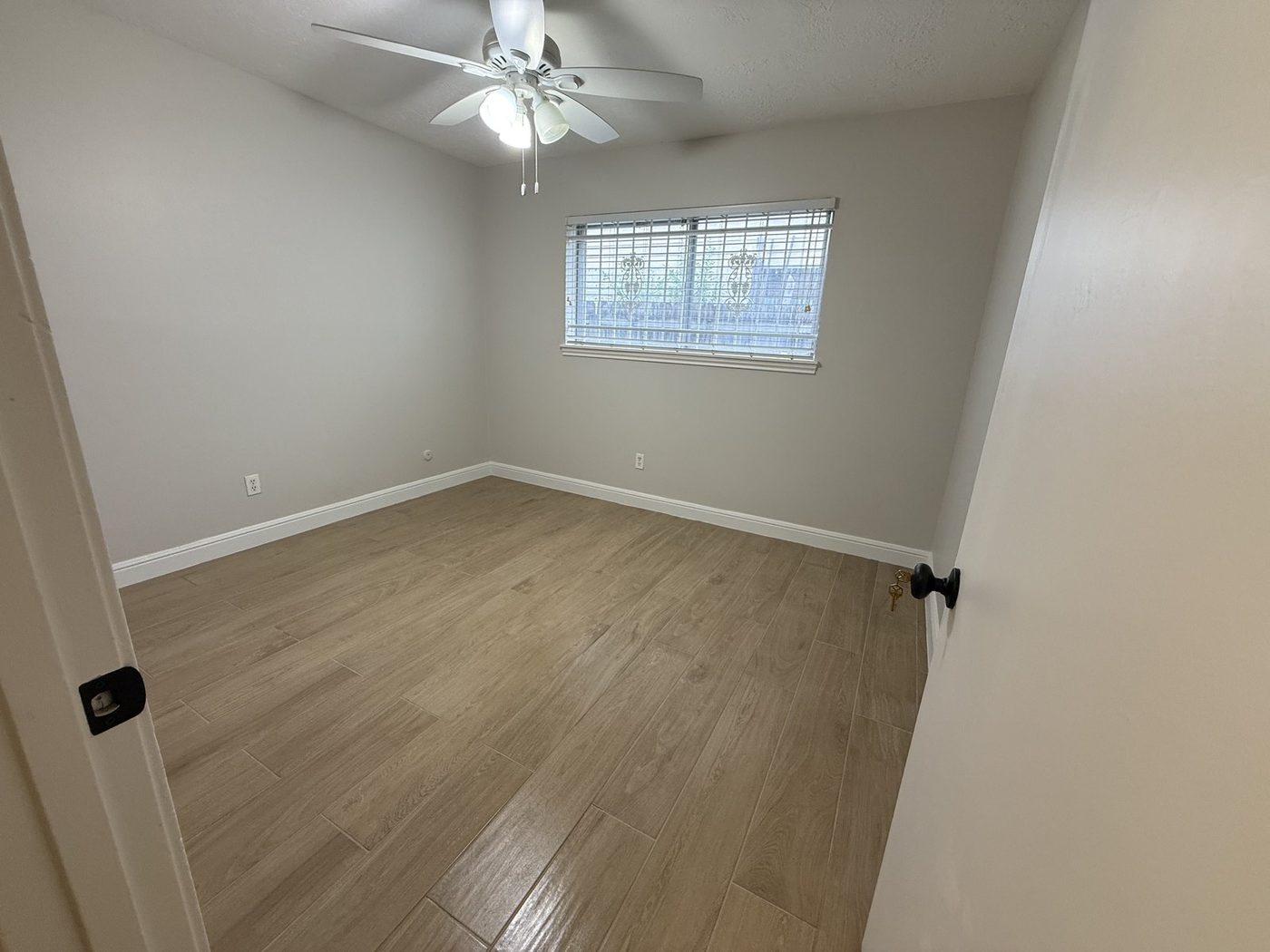
Book the clean after the last trade has finished and the punch list is done, not while work is still going on. A post-renovation clean removes the fine dust that settles on every surface, inside cabinets and on vents, blinds and window tracks, plus paint specks and sticker residue. If your home was built before 1978, make sure the contractor's own lead-safe cleanup is finished first.
What does "broom clean" actually leave behind?
Drywall sanding, tile cutting and trim work all make dust fine enough to float. It drifts out of the work area and keeps settling for a while after the work stops, on door tops, light fixtures, ceiling fan blades and the tops of cabinets. Sweeping the floor does nothing about any of that.
A contractor's cleanup is built to get the job site safe and the trash hauled off. A post-renovation clean is the detail pass that comes after. Check which one your contract includes.
When the plastic comes down
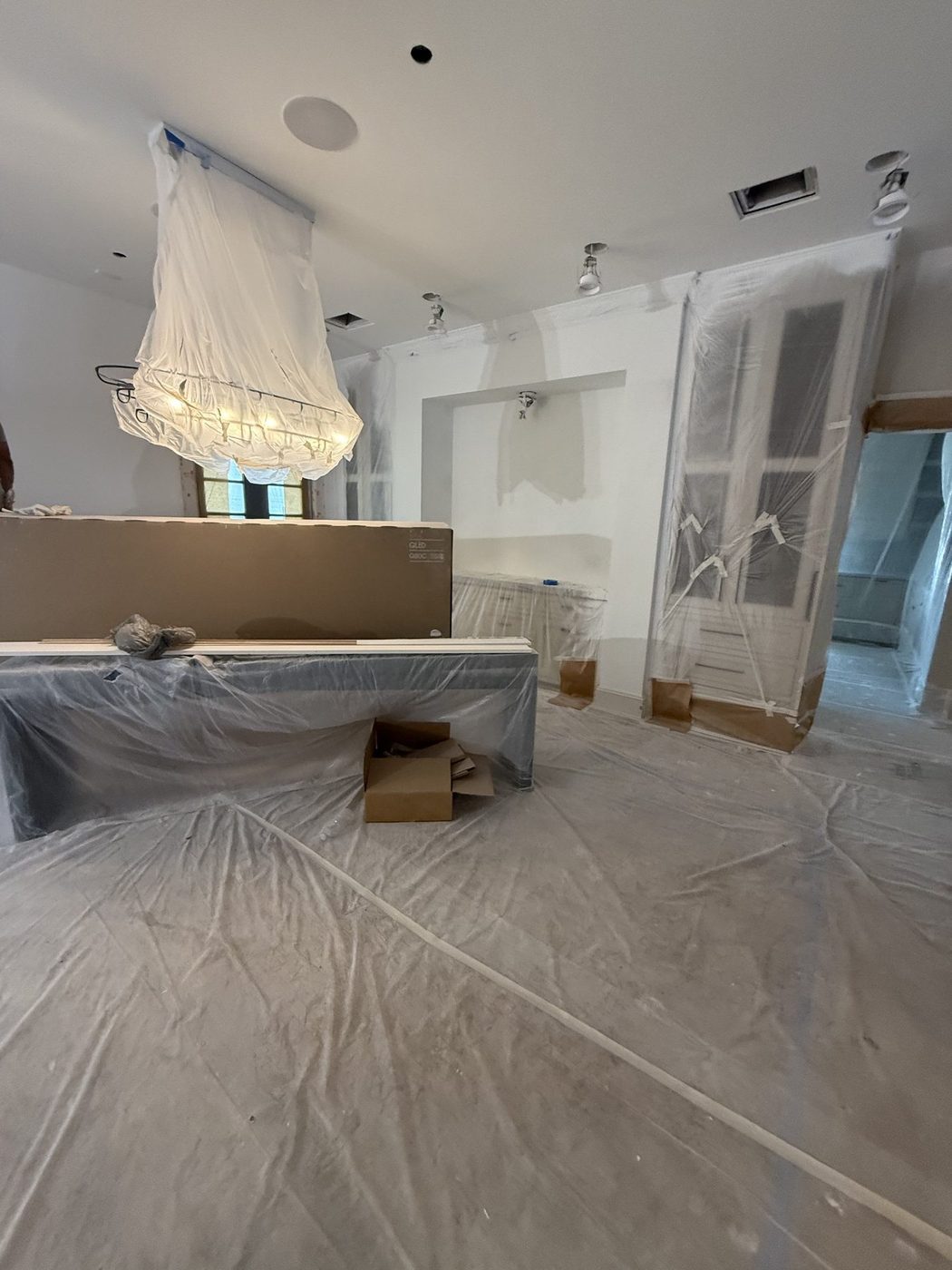
Plastic sheeting and floor protection keep the worst of the mess contained. But dust collects on top of the plastic, and some of it falls when the sheeting is pulled. The tape can also leave residue on trim and floors.
That's why we ask that all protection be removed before we arrive. Cleaning around sheeting that's still up means cleaning the same room twice.
When should you book a post-renovation clean?
After the last trade has been through. Painters coming back for touch-ups, an electrician swapping a fixture or a plumber finishing a faucet will each bring a little more dust with them. Ask your contractor for the date the punch list will be done and book the clean for the day after.
If you're finishing a remodel before holiday guests, leave a day of cushion between the contractor's last visit and the cleaning.
Kitchens and cabinet interiors
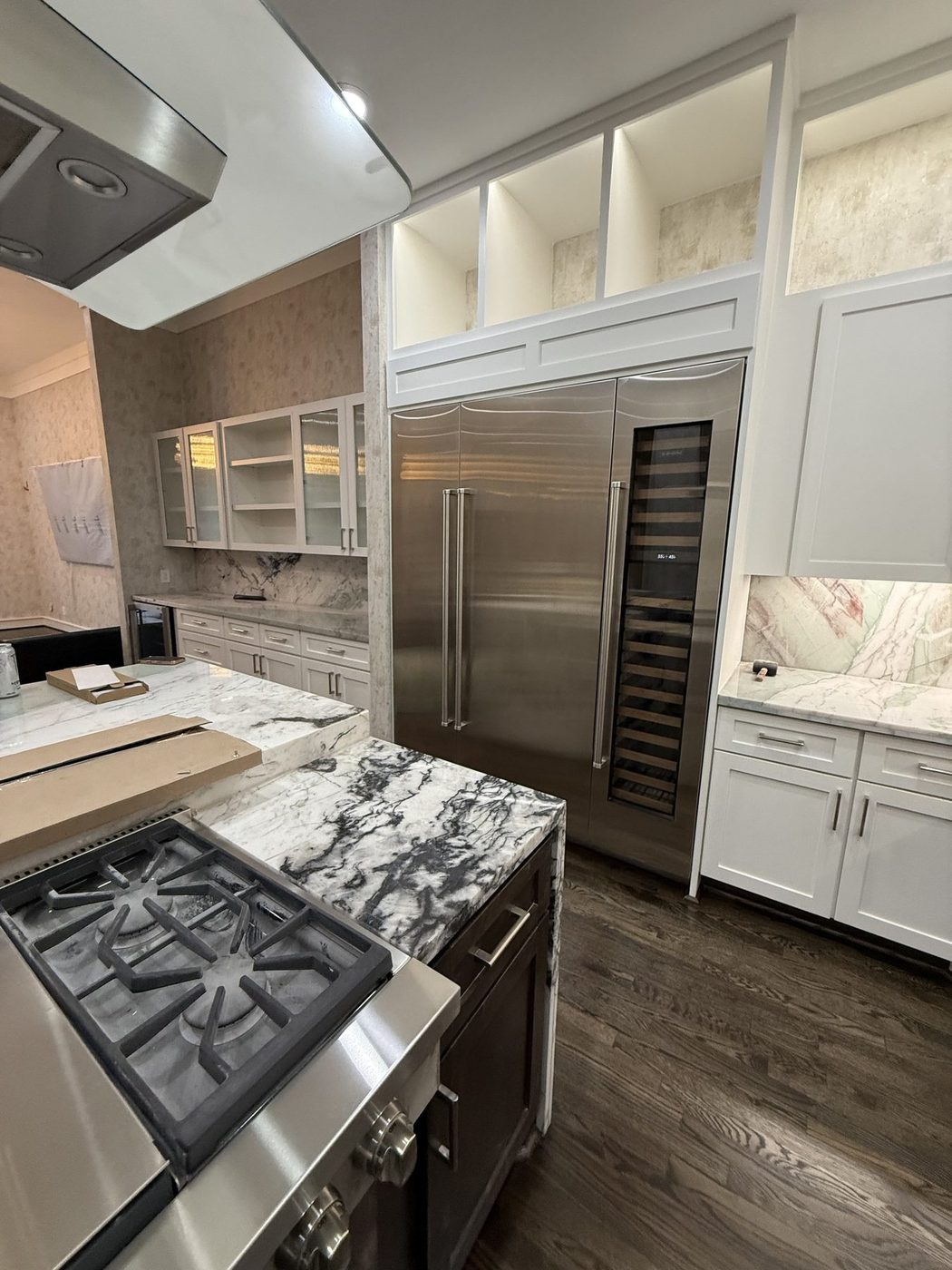
New kitchens collect dust in places that are easy to miss: inside every drawer and cabinet, on open shelves, in range grates and burner caps, along the top of the refrigerator and in the grooves of cabinet doors.
We wipe cabinets inside and out, clean appliance exteriors and remove the protective film and stickers that come on new fixtures and appliances. Stone counters get a damp wipe with a cleaner that's safe for stone, never anything acidic.
Blinds, vents, tracks and trim
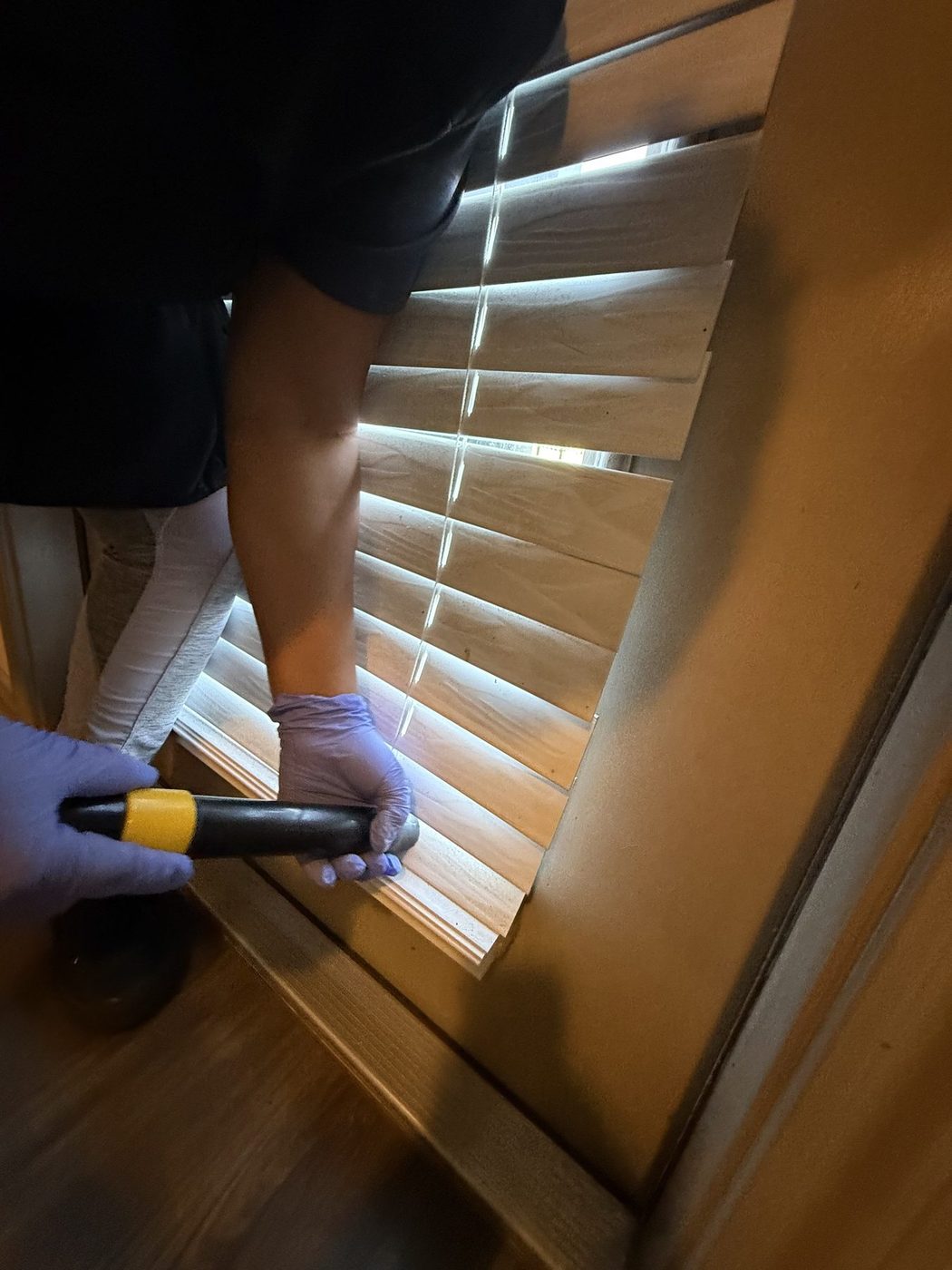
Fine dust settles into every ridge. Blinds get cleaned slat by slat. Air vent covers, baseboards, door frames and window sills get wiped down. Window and sliding-door tracks get vacuumed and wiped, because grit collects there and stays.
We work top to bottom, so dust knocked down from a ceiling fan doesn't land on a floor that's already been cleaned.
Floors, last
Floors are always the last step. Dry sweeping fine dust mostly stirs it back into the air, so we vacuum first and then damp-mop. On new tile, a second damp-mop pass often helps pull dust out of the grout lines. Heavy grout haze left from installation is a fix for the tile setter, and we'll point it out if we see it. Paint specks and adhesive spots get handled one at a time with the right method for the surface.
What if your Houston home was built before 1978?
Paint from before 1978 can contain lead. If you're not sure when your Houston home was built, the Harris Central Appraisal District (HCAD) record for your property lists the year. The EPA's Renovation, Repair and Painting Rule says that, "in general, anyone who is paid to perform work that disturbs paint in housing and child-occupied facilities built before 1978" … "must be certified." It applies to "all firms, even sole proprietorships" (EPA, Renovation, Repair and Painting Program: Contractors).
If your remodel disturbed old paint, ask your contractor for their EPA firm certification and confirm their lead-safe cleanup is finished before any cleaning crew comes in. A regular cleaning is not a substitute for that work.
What should you check before the cleaning crew arrives?
- The punch list is done, and no trade is scheduled to come back.
- Plastic, floor protection and tape are removed, or you've agreed who removes them.
- Large debris and leftover materials are hauled off. A cleaning crew isn't set up to haul drywall scraps or leftover materials.
- Water and power are on and the AC is running.
- The HVAC filter is changed, or a new one is on hand.
- For a pre-1978 home, the contractor's lead-safe cleanup is finished.
- You've pointed out the problem spots: paint on glass, grout haze, adhesive on floors.
We clean after remodels and new construction across Houston, Katy, Cypress, Sugar Land, Missouri City, Sienna and Richmond, along with Bellaire, West University and Meyerland.
Questions we get
How soon after a remodel should I schedule cleaning?
Schedule the post-renovation clean for the day after the last trade finishes the punch list. Booking earlier usually means paying for a second clean when the painter or electrician comes back.
Is a post-renovation clean the same as a deep clean?
No. A deep clean targets built-up grime from everyday living. A post-renovation clean targets construction dust, paint specks and residue, which settle on surfaces a deep clean doesn't usually cover, like cabinet interiors, vents and window tracks.
How is post-renovation cleaning priced?
After a walkthrough or a few photos, based on the size of the space and how much dust and residue the job left. Remodels vary too much to quote fairly over the phone.
Do you remove construction debris?
Puretek Global Cleaning removes the small stuff left after a remodel: tape, stickers, protective film and leftover dust. Large debris, leftover materials and dumpsters are the contractor's job and should be gone before we arrive.